You know the subject. You have prepared the figures, read the papers and answered the same question privately many times.
Then somebody says, “Louise, could you talk us through that?”
Your heart starts beating harder. Your mouth feels dry. Your voice sounds less steady than it did thirty seconds ago, and you become aware of every person who can hear it.
You are no longer simply explaining the point. You are monitoring yourself explaining it.
Your voice may shake in meetings because the body has responded to a predicted threat of scrutiny, judgement or visible loss of control. Changes in breathing and muscle tension affect the voice. Once you listen for the shake, that self-monitoring can intensify the response and make it harder to use knowledge that is already there.
This can happen to experienced, articulate people who speak comfortably in most situations. The problem is not necessarily a lack of confidence, knowledge or communication skill. It is the automatic meaning attached to speaking while attention is on you.
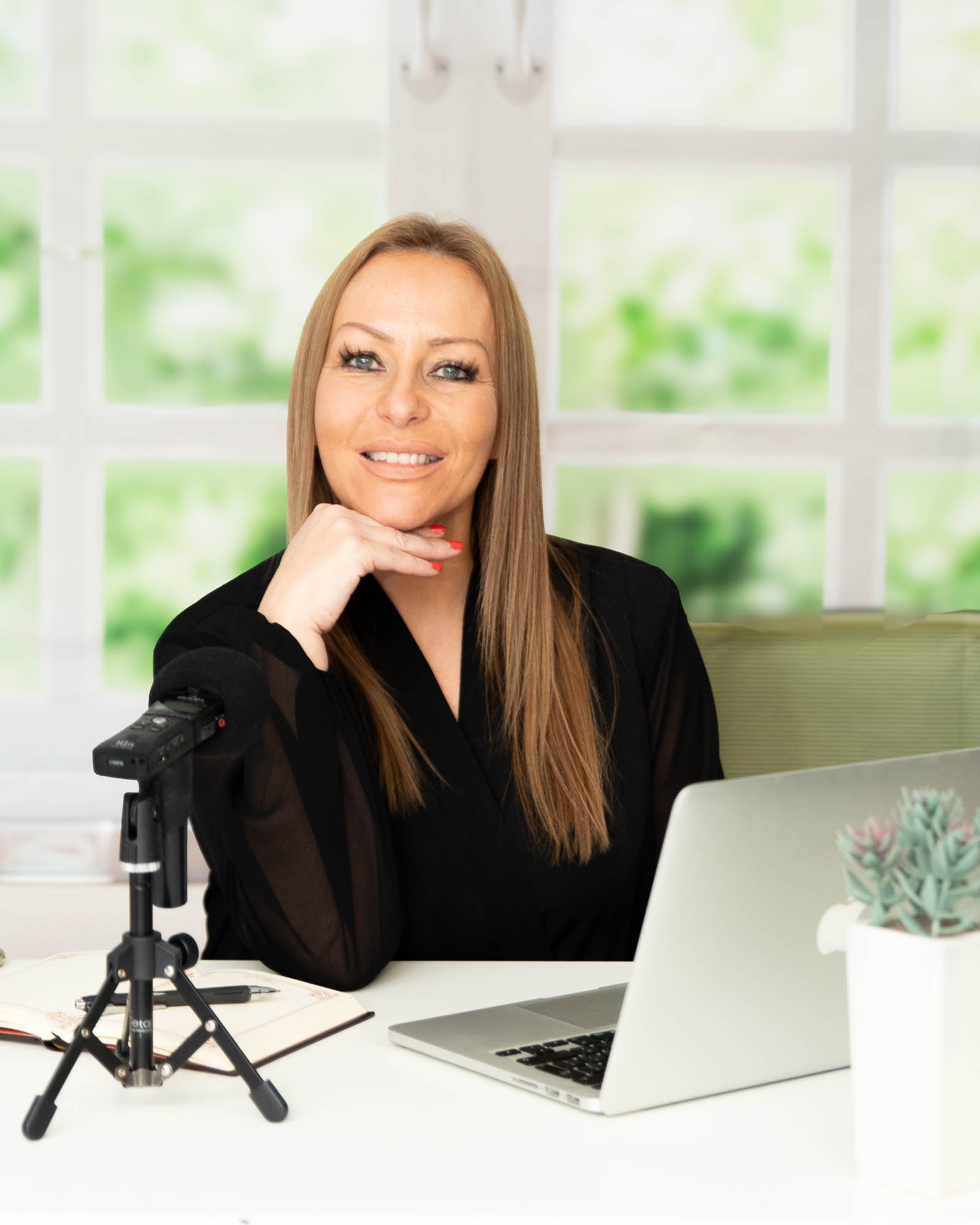
I am Louise Squires, a Clinical Hypnotherapist and Psychotherapist specialising in anxiety, panic and phobias. I work privately from Cavendish Square in London’s Harley Street medical district and online throughout the UK.
My Focused Hypnotherapy Programme works with the pattern beneath the physical response, overpreparation and fear of being seen struggling.
What can public-speaking anxiety look like at work?
You may be comfortable discussing the work with one colleague and become anxious when the same information has to be delivered to a room. You may contribute easily until the meeting becomes formal, a senior person joins or somebody asks you to stand.
- Knowing what you want to say but waiting too long to speak
- Rehearsing the first sentence while missing part of the discussion
- Reading directly from slides you know well
- Worrying that your voice will shake on your name or opening line
- Taking water so you can pause without it looking unusual
- Speaking quickly to finish before the anxiety becomes visible
- Avoiding words you think are difficult to say steadily
- Keeping contributions short despite having more to add
- Feeling your mind go blank when somebody asks a question
- Watching faces for signs that people have noticed
- Turning the camera off whenever the meeting allows it
- Declining presentation opportunities that would help your career
- Preparing far more material than the meeting requires
- Feeling immediate relief when somebody else answers first
- Replaying your delivery long after everybody else has moved on
Other people may hear a useful, informed contribution. You hear the breath you took in the middle of a sentence and the word that sounded less certain than you wanted.
Why does your voice shake when attention turns towards you?
The voice depends on breath, muscle coordination and airflow. When your body prepares for a threat, breathing can become quicker or shallower and muscles around the throat, jaw and upper body can tighten. The voice may feel thinner, higher, breathier or less steady.
The change can be small. What makes it feel enormous is the attention you give it.
“It is getting worse.”
“Slow down.”
“Take a breath without making it obvious.”
You try to control an action that normally happens automatically. Speaking starts to feel mechanical because you are producing the sentence and inspecting it at the same time.
The shaking is a physical anxiety response. It is not evidence that you do not know the subject or cannot handle the meeting.
Why does your mind go blank when you know the answer?
Your knowledge has not disappeared. Your attention has been divided.
Part of you is following the question. Another part is checking your face, voice, breathing and the reactions around the table. A third part is searching for the answer that will sound most intelligent and least open to challenge.
That leaves less attention available for retrieving and organising what you know. A familiar name or figure can suddenly feel inaccessible. The pause then appears to confirm the fear that you are not performing properly.
Research on social anxiety and public speaking has linked self-focused attention with greater anxiety and more negative self-evaluation during a speech task. Read the research abstract on self-focused attention and public speaking.
The practical problem is not that you need to concentrate harder on yourself. You are already concentrating on yourself too much.
Why can the anxiety begin days before the meeting?
The presentation may be on Thursday, but your mind starts delivering it on Monday.
You picture the room, the first slide and the moment questions begin. You hear your voice shaking in an event that has not happened. Each rehearsal creates a physical response, which makes the future situation seem more threatening.
You protect the evening before because you must sleep properly. You change what you eat in case your stomach reacts. You check the agenda again to see who will attend.
Preparation is useful. Anticipatory anxiety begins when the event repeatedly occupies the present and you try to solve how you will feel before you get there.
Why can extensive preparation make confidence more dependent?
You know the material, but another run-through feels safer. You prepare answers for questions outside the purpose of the meeting. You write complete sentences on the slides in case your mind goes blank.
The presentation goes well. Your mind decides the extra preparation protected you.
Your knowledge, judgement and ability to respond in the moment receive very little credit. The protective routine receives all of it.
Next time, doing less feels reckless. The standard expands because the previous success has not been allowed to become evidence of your ability.
This is a familiar part of high-functioning anxiety. Strong performance is maintained, but it is privately attributed to pressure, checking and preparation rather than competence.
Why does being watched make an ordinary action feel unnatural?
You speak every day without deciding where to look, how to hold your hands or when to breathe. In a meeting, those automatic actions suddenly feel visible.
You become conscious of picking up a glass, changing slides or standing still. You plan eye contact instead of looking naturally towards the people you are addressing.
The closer you supervise the action, the less familiar it feels. You interpret that unfamiliarity as evidence that something is going wrong.
You have not lost the ability to speak. You are interfering with an automatic process by trying to control how it appears from the outside.
What are you afraid the audience will conclude?
The feared outcome is often more specific than “I will feel nervous.”
You may believe a shaking voice will make you look inexperienced. A pause could make a senior colleague question whether you understand the work. A red face might show that you are intimidated. Needing to check a figure could expose you as less capable than people believe.
This is why “Nobody cares if you are nervous” may not settle the response. Your mind has attached a professional or personal consequence to being seen that way.
If the central fear is that one uncertain moment will reveal that your success is undeserved, read about imposter syndrome at work.
Why can public-speaking anxiety become worse as you become more senior?
Experience does not always remove the pattern. Seniority can increase the perceived cost of being visibly uncertain.
More people expect you to have an answer. Your presentations carry greater commercial or professional importance. You may be introduced as the expert, which makes an ordinary pause feel inconsistent with how you have been described.
You also have more evidence that you can do this. Anxiety dismisses that evidence because you prepared, knew the audience or had supportive colleagues. The next unfamiliar room remains a separate test.
Why can video calls feel just as difficult?
A video call removes the physical room and gives you a live image of yourself.
You can see whether you look nervous. You watch your expression while speaking and notice the delay before somebody responds. A person looking at another screen appears distracted or unimpressed.
You may hide your self-view, then wonder what everybody else can see. You check the camera angle, lighting and microphone because controlling the technology feels like one part of the impression you can manage.
The meeting may happen from home, but the same fear of scrutiny is present.
Why do questions feel more threatening than the presentation?
The prepared section belongs to you. Questions introduce somebody else’s wording, timing and priorities.
You cannot know exactly what will be asked. You may feel you must answer immediately, even when a considered response would be more appropriate. A normal moment spent thinking feels like visible failure.
You begin answering before you have decided what you think, then hear yourself becoming less clear. Afterwards, you find the concise answer you wish you had given.
Professional confidence includes being able to say, “I want to check that figure,” “I do not have that information here,” or “Let me think about the best answer.” Anxiety treats those reasonable responses as admissions.
Why do you replay the presentation afterwards?
The meeting ends, but you continue looking for a verdict.
You remember the moment your voice changed and give less attention to the useful answer that followed. You examine one person’s expression and wonder whether the room became quieter because everybody noticed.
A better sentence occurs to you in the car or on the train home. Finding it provides a brief sense that the performance could have been repaired, so your mind continues reviewing.
Post-event processing has been associated with public-speaking anxiety and negative self-appraisal. Read the study abstract on post-event processing.
If this reviewing continues across conversations, decisions and messages, the Overthinking page explains the wider pattern.
Why does reassurance fail to create lasting confidence?
A colleague says you sounded confident. You feel better, then decide they were being kind or did not notice the moment that concerns you.
Your manager praises the presentation. You conclude that the content was strong but your delivery was not. Somebody asks you to present again, and you treat the invitation as a new situation rather than evidence from the last one.
Reassurance can settle a particular doubt. It does not change the automatic rule that visible anxiety would be dangerous. The next presentation creates a new detail that has never been reassured.
What I notice in my clinical work
In my clinical work, I often notice that people with public-speaking anxiety describe the presentation as though two events took place.
There was the presentation the audience received: informed, useful and completed. Then there was the presentation they experienced internally: the heartbeat, dry mouth, effort to sound steady and fear that everybody could see the same thing.
“I can hear my voice going.”
“I just need to get through the first minute.”
“Everybody says it went well, but they did not know what was happening inside.”
The work is not about pretending the internal response never happened. It is about stopping that response from becoming the measure of the presentation.
Is public-speaking anxiety the same as social anxiety?
They can overlap, but they are not identical.
Public-speaking anxiety may be limited to presentations, meetings, introductions or speaking while people are watching. You may enjoy social events and speak comfortably in ordinary conversation.
Social anxiety can affect a wider range of situations involving possible scrutiny, including informal conversation, eating while watched, meeting new people or sending messages.
NICE describes a performance-only form of social anxiety in which fear is restricted to speaking or performing in public. A formal assessment should be made by an appropriately qualified professional when needed. Read the NICE guidance on social anxiety disorder.
Is this a panic problem?
Public speaking can produce a strong physical response, including a pounding heart, breathlessness, dizziness, trembling and a sense that you need to get out.
If the main fear concerns the physical sensations themselves, losing control or having another sudden episode, read about panic attacks.
With public-speaking anxiety, the response is usually organised around speaking while observed and what other people may conclude. Both patterns can occur together.
Why does logical reassurance not stop the response?
You already know that one shaky sentence does not erase your expertise. You may understand that the audience is focused on the subject rather than inspecting your breathing.
The response can continue because it has become automatic.
The meeting activates a prediction of scrutiny. Your body responds to the prediction. You monitor the response, which increases its importance. Preparation, rushing or avoidance gives temporary relief, so the same protection is requested next time.
Logic is accurate, but it arrives after the learned sequence has already begun.
What changes when speaking stops being a test?
You prepare the information the meeting requires, then stop. When your turn arrives, you listen to the actual question instead of the version you rehearsed.
You can:
- Begin without waiting to feel completely calm
- Let your first sentence be an ordinary sentence
- Use notes without hiding behind them
- Pause because you are thinking
- Look at the people rather than imagining how you look to them
- Say what you know without preparing every possible challenge
- Ask for clarification when a question is unclear
- Check information when accuracy requires it
- Allow your voice to settle without repeatedly testing it
- Finish the meeting without conducting a private performance review
The aim is not to deliver every presentation without a single physical sensation. It is to speak because you have something to contribute, without supervising yourself as though the room is waiting for you to fail.
How may hypnotherapy help with public-speaking anxiety?
Hypnotherapy may be used to address the learned connection between visible attention, predicted judgement, physical anxiety and protective behaviours such as overpreparing, rushing and self-monitoring.
We look at where the response begins, whose judgement feels important, what you believe people may notice and what you fear they would conclude. We also identify what you do to prevent that outcome and how the relief from those behaviours keeps the pattern active.
The work stays focused on the response you want. You can retain your standards, preparation and professional care without treating a presentation as a test of whether you deserve to be in the room.
Focused work for people ready to move beyond the pattern
My Focused Hypnotherapy Programme is a fast, structured process for anxiety, panic, phobias and other automatic patterns.
Initial consultation
We discuss what happens before, during and after you speak, what visible anxiety appears to mean and the response you want instead.
One to four structured sessions
The programme involves one to four structured sessions. Some clients find one or two sessions are all they need. I recommend the appropriate option after understanding the history, impact and nature of the pattern.
Supporting audio and ongoing support
Every client receives supporting audio and ongoing support from me as part of the programme.
Public-speaking anxiety treatment in Harley Street and online
In-person appointments are available privately in Cavendish Square, within London’s Harley Street medical district. Online appointments are available throughout the UK.
Explore the wider Anxiety Hub, learn more about my experience and approach, view the Harley Street clinic information or read the general hypnotherapy FAQs.
When should you seek additional support?
Speak to your GP or another appropriately qualified mental-health professional when anxiety is significantly affecting your work, relationships or daily life. The NHS explains that social anxiety can involve worry before, during and after social situations and difficulty doing things while others watch. Read the NHS overview of social anxiety.
Hypnotherapy does not replace appropriate medical or psychological assessment and treatment. Seek urgent professional help if you feel unable to keep yourself safe.
Questions about public-speaking anxiety
Why does my voice shake when I speak in meetings?
Your voice can shake when the body prepares for a predicted social or professional threat. Changes in breathing and muscle tension affect how the voice feels and sounds. Monitoring for the shake can increase the same response.
Why does my mind go blank when I know the subject?
Part of your attention may be occupied by monitoring how you look and sound, anticipating judgement and trying to retrieve the perfect answer. Your knowledge has not disappeared, but less attention is available for using it naturally.
Is public-speaking anxiety the same as social anxiety?
They can overlap, but they are not identical. Public-speaking anxiety may be limited to presentations, meetings or speaking while observed. Social anxiety can affect a wider range of interactions and situations involving possible scrutiny.
Let them hear what you know
You do not need to sound completely untroubled before your contribution can be useful.
You can know the subject and take a moment to think. You can answer the question that was asked rather than preparing for every possible challenge. You can allow the room to listen without turning their attention into a verdict.
Your initial consultation is where we identify what speaking has come to mean, clarify the response you want and decide whether my Focused Hypnotherapy Programme is right for you.
Your consultation deposit is deducted from any sessions you subsequently book. The 48-hour cancellation policy applies.