You have finally stopped.
The work is finished. Nobody needs anything from you. You have an evening with nothing you have to do.
This should feel good.
Instead, your mind becomes louder.
You remember something you may have forgotten. You begin reviewing tomorrow. Your body feels unsettled and you cannot get comfortable. You pick up your phone, start tidying or find another small job that suddenly feels important.
You may feel more anxious sitting quietly than you did during the busiest part of your day.
Your mind may simply have become more familiar with doing, preparing and monitoring than it is with having nothing to manage.
The aim is for rest to feel ordinary again. You can finish the day, allow your attention to settle and enjoy having nowhere else to be.
What anxiety during relaxation can look like
Feeling anxious while trying to relax does not always involve obvious panic.
- Reaching for your phone as soon as the room becomes quiet
- Remembering jobs the moment you sit down
- Feeling restless while watching television
- Struggling to follow a film because your mind is reviewing the day
- Becoming aware of your heartbeat, breathing or other physical sensations
- Feeling guilty when you are not being productive
- Starting household jobs late at night
- Checking emails after deciding that work has finished
- Mentally preparing for tomorrow while lying in bed
- Filling every free weekend with plans
- Feeling uneasy on holiday because there is nothing urgent to organise
- Believing you can relax properly once everything is completed
You may describe yourself as somebody who likes to keep busy. The useful question is whether busyness is a choice or whether stopping has begun to feel unsafe.
Why does anxiety appear when everything becomes quiet?
During a demanding day, your attention has somewhere specific to go. You respond to messages, make decisions and move from one responsibility to another.
When the external demands stop, your attention becomes available. Thoughts and physical sensations that remained in the background can suddenly feel much more noticeable.
At 4pm, you are dealing with a problem at work. At 8pm, you are sitting on the sofa wondering why your chest feels tight, whether you handled a conversation properly and what might go wrong tomorrow.
The quiet did not create every concern. It removed the noise that had been competing with them.
If the feeling seems to appear even when there is no obvious thought or situation behind it, read why anxiety can feel as though it has no reason.
Your mind may have learned that staying prepared keeps you safe
High-functioning anxiety is often rewarded. You plan ahead, remember details, anticipate difficulties and make sure things get done. Other people may describe you as organised, reliable and calm under pressure.
The difficulty develops when preparation stops having a finishing point.
“If I stop thinking about it, I will be unprepared.”
“If I relax too much, something will go wrong.”
The feeling of being prepared brings temporary relief. That relief encourages more preparation. You check tomorrow’s calendar once more, revisit a decision or send the email now rather than leaving it until morning.
Each action feels small and sensible. Together, they teach your mind that remaining alert is what prevents problems. Relaxation then feels less like rest and more like taking your eye off something important.
Worry can feel safer than being caught off guard
Some people remain worried because the worried state feels more prepared for bad news. If something difficult happens, they believe the emotional impact will be smaller because they were already expecting it.
Moving from calm to frightened can feel more threatening than remaining slightly anxious. Your mind may keep a background level of worry in place so that nothing can take you by surprise.
Research into relaxation-induced anxiety has examined this through the Contrast Avoidance Model. One study found that people with generalised anxiety disorder who were more sensitive to changes in negative emotion experienced greater anxiety during relaxation. The researchers proposed that sustained worry can be used to avoid the sharp change from feeling calm to feeling frightened. Read the study indexed by PubMed.
This is usually an automatic strategy. Your mind may have learned that expecting difficulty feels more controlled than allowing yourself to feel completely at ease.
Why trying harder to relax can make things worse
Once you notice that you cannot relax, relaxation becomes another task. You monitor whether it is working.
“Why am I still tense?”
“Am I doing this properly?”
The more closely you assess your internal state, the more anxiety-related information you find. You notice your breathing, muscle tension and every new thought, then treat them as evidence that you have failed to switch off.
Relaxation has become a performance with an outcome you must achieve. This is why being told to “just relax” can feel so irritating. You already know what you are supposed to be doing. The automatic response has not received the same instruction.
When rest feels unproductive or undeserved
You may have learned to value yourself through achievement, usefulness or how much you can carry.
Finishing a job feels satisfying because it proves you have done enough. Rest can feel vague. There is nothing to complete and no visible result to show for it.
You may think, “I should be doing something useful”, “I have not earned an evening off” or “If I slow down, I will lose momentum”. Your behaviour can be organised around these statements even when you do not consciously agree with them.
Your mind has connected stillness with guilt, vulnerability or loss of control.
Why anxiety often becomes louder at night
Night removes many of the distractions that kept your attention occupied during the day. Your body is tired, while your mind is finally free to review everything it postponed. If slowing down triggers repeated reviewing, rehearsing and reopening of questions, read about overthinking anxiety treatment.
A conversation returns. You remember a task for next week. You think about a sensation you noticed earlier. You begin solving a problem that cannot be resolved at midnight.
Bedtime can eventually become a cue for mental activity. You expect your mind to race, so you monitor whether it is happening. That anticipation brings the pattern forward.
You may use your phone, television, podcasts or constant background noise to prevent quiet. The question is whether you are choosing them for enjoyment or using them because silence has become difficult to tolerate.
Is keeping busy an avoidance behaviour?
Busyness can become a form of avoidance when its main purpose is to prevent you from encountering a thought, feeling or bodily sensation.
Look at what happens when the activity ends. Can you finish and decide that enough has been done? Can you enjoy an unplanned afternoon? Can you take a holiday without remaining responsible for everything at home? Can somebody else handle something without you monitoring how they do it?
If activity is the only state in which you feel comfortable, the problem may be less about your schedule and more about what your mind predicts will happen when you stop.
You do not have to empty your mind to rest
A calm mind is not a completely silent mind. Thoughts can appear while you are resting. Your body can produce sensations. Tomorrow can contain unfinished tasks.
You can remember an email without sending it immediately. You can notice tension without investigating it. You can think about tomorrow without mentally living through it.
Rest becomes easier when every internal event stops being treated as something that requires action.
What changes when your mind becomes comfortable with rest?
You finish work and leave it finished. You watch a programme and remain aware of what is happening on the screen. You take a day off without using it to catch up on everything.
You go on holiday without continually checking whether everybody at home is coping. You notice that your body is quiet without scanning it for a problem. You fall asleep without completing a full review of the day.
You still plan, prepare and take your responsibilities seriously. You become able to stop when the useful work is complete.
How hypnotherapy may help when you cannot switch off
You may already understand that you need more rest. You may have tried putting your phone away, booking time off or deliberately doing less. The practical opportunity to rest may be present while the internal response remains unchanged.
Hypnotherapy may be used to work with the automatic thoughts, physical responses and behaviours that make rest feel uncomfortable. We look at what happens when activity stops, which thought appears first, what your mind believes continued alertness will prevent and what you do to reduce the discomfort.
The work is intended to allow your capable mind to recognise when its work is complete.
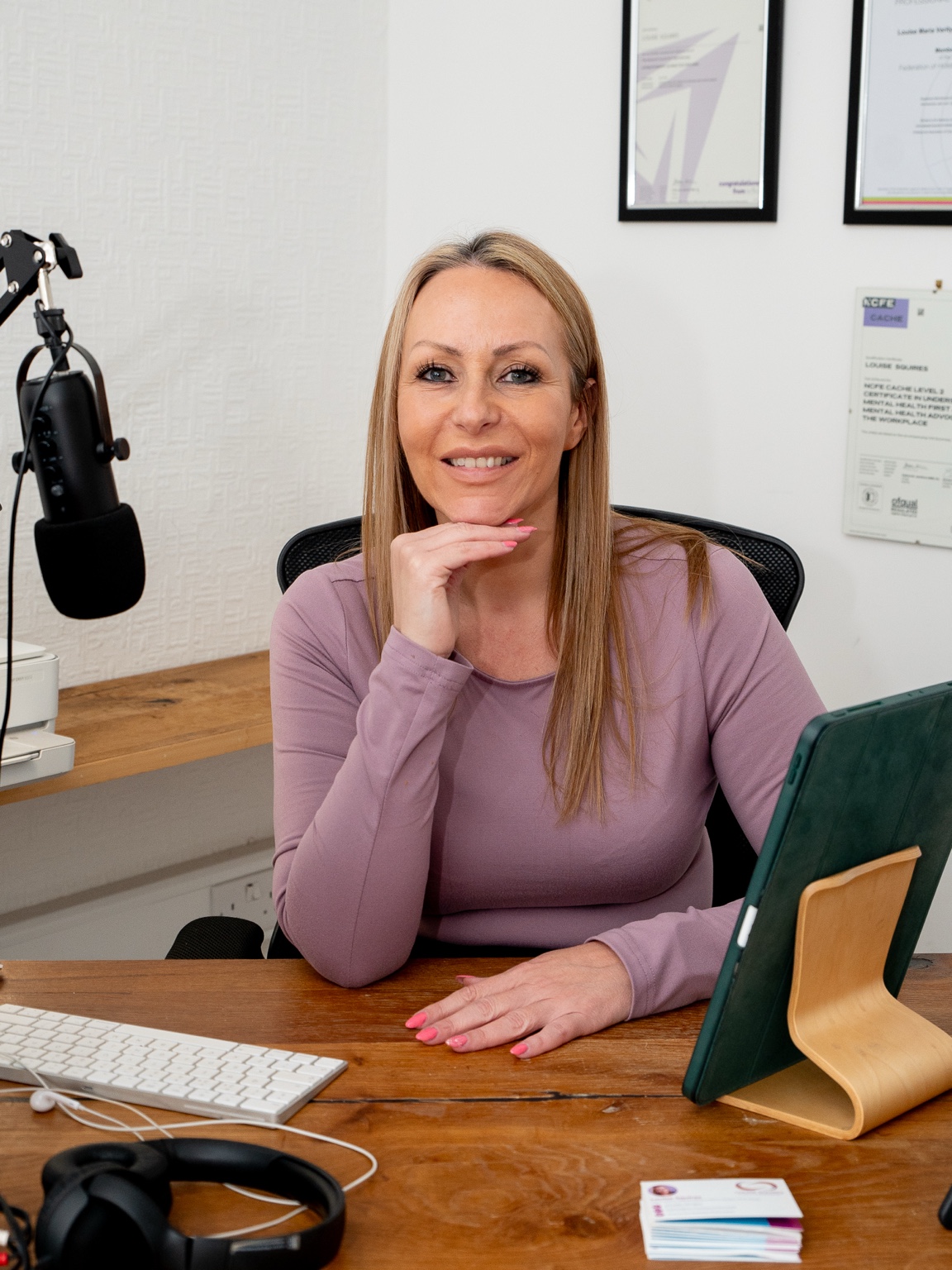
I have worked privately with more than 1,000 clients, including high-functioning people who remain composed throughout demanding days and experience the anxiety once there is nothing left to manage.
My Focused Hypnotherapy Programme is delivered through one to four structured sessions. Some clients find one or two sessions are all they need. Every client receives supporting audio and ongoing support from me. I recommend the appropriate level of support after your initial consultation.
Appointments are available privately in Cavendish Square, within London’s Harley Street medical district, and online throughout the UK.
You can learn more about my clinical experience and approach or explore other patterns in the Anxiety Hub.
When to seek additional support
If anxiety is significantly affecting your daily life, sleep, relationships or ability to function, speak to your GP or another qualified mental-health professional.
The NHS provides information about anxiety, available treatments and routes to support. Read the NHS guidance on anxiety, fear and panic.
Call 999 or attend A&E if there is an immediate risk to your safety. If you need urgent mental-health support but it is not an emergency, use NHS 111 and select the mental-health option.
Frequently asked questions
Why do I feel anxious as soon as I sit down?
During activity, your attention is occupied by external demands. When you sit down, thoughts and physical sensations that remained in the background can become more noticeable. If your mind associates vigilance with safety, stopping may also trigger an urge to prepare, check or find another task.
Is anxiety when relaxing a real condition?
Relaxation-induced anxiety is a recognised research term describing an increase in anxiety during attempts to relax. Experiencing it does not establish a particular diagnosis.
Why do I feel guilty when I am not being productive?
Your sense of safety or self-worth may have become closely connected to achievement, responsibility or usefulness. Rest can then feel undeserved or risky.
Why does my anxiety become worse at night?
At night there are fewer external demands competing for your attention. Your mind may begin reviewing concerns postponed during the day. Anticipating this can also make bedtime itself a cue for worry.
Is constantly keeping busy a form of anxiety?
It can be when you feel unable to stop, use activity to avoid thoughts or sensations, or experience significant discomfort whenever nothing needs doing.
Do I need to clear my mind to relax?
No. Relaxation does not require an empty mind. Thoughts can come and go without being analysed, solved or turned into action.
Can hypnotherapy help me switch off?
Hypnotherapy may help address the learned response that keeps your mind alert during rest. The work is tailored to your triggers, predictions and habitual behaviours. Suitability is assessed during the initial consultation. For practical questions, visit the FAQs.